Understand the topic workflow template
Inspire provides you with a template for the content development tasks you need to complete before translation or publication. This workflow is centered around the content and uses Activities, Workgroups, and Transition Actions to organize the development work.

 If you want to start with nothing pre-defined, you can create a completely new workflow template.
- To create a new component that has a type of Workflow, follow the steps in: Create a workflow template component.
- You must define all your building blocks before you can create Activities and Transitions. Follow the steps in: Use the workflow editor.
- You can use this topic to understand how a topic workflow template is built before creating your own from scratch.
 If you want to save a copy of an existing workflow to edit, use Save As to create a copy to customize. Follow the steps in: Save a copy of a workflow template.
 What is a Project workflow?
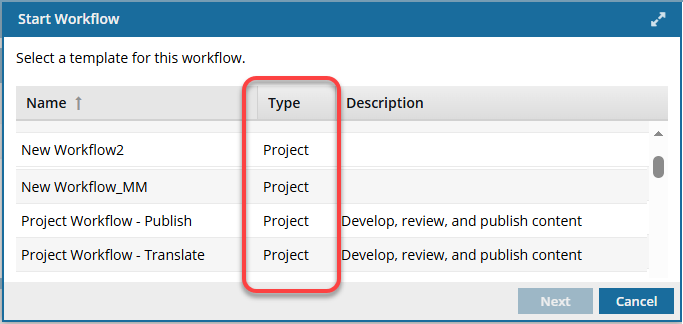
- The Topic workflow that Inspire provides has a Workflow Type of Project. This is different from the Component Type, which is Workflows.
- When you create an entirely new Workflow component, you select the template for Workflows, and the Component Details shows a Component Type of Workflows. However, the Workflow Type is Project.
- You may see Topic workflows referred to as Project workflows, and vice versa.
 In this topic, you can learn about:
Required permissions
 You must have permission to the Projects Module to work with projects and workflows.
 Keep in mind that administrators and other users can set permissions on components and folders.
- You must have permission to edit the workflow template component.
- You must have folder permissions where the template is stored.
- For details on how to check and set permissions, refer to: Set permissions.
The default topic workflow template
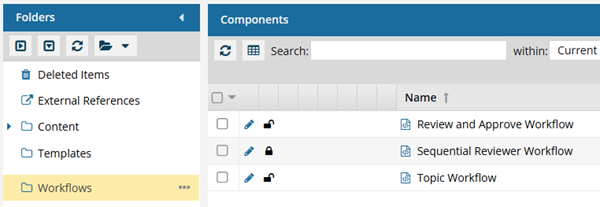
Inspire provides default workflow templates in the Workflows folder.
If you move a workflow out of this folder:
- It retains its file type of Workflow.
- When you open the component, you can edit it in the workflow editor (not Oxygen).
- You can select it when you're working in a project and click Create workflow.
- To move a component, refer to the steps in Move components.
The default topic workflow template provided by Inspire uses the following process:
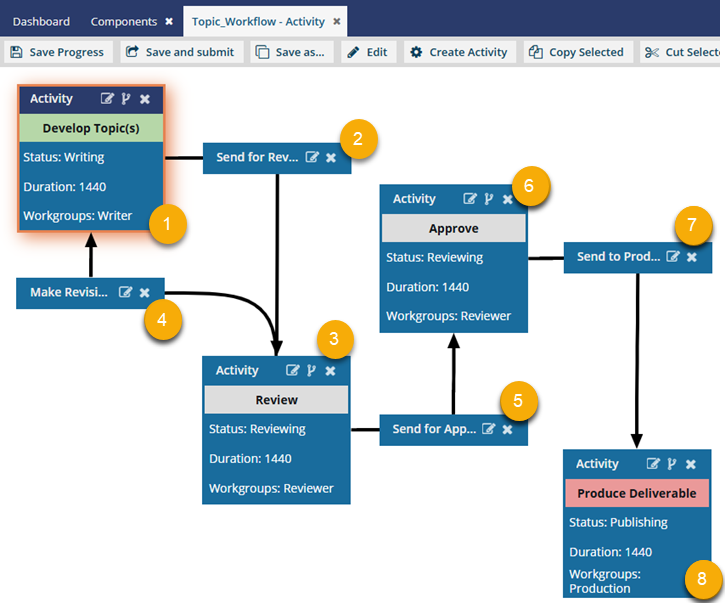
 Inspire sends a notification to the Workgroup (Writer).
- The workflow starts with an initial Activity: Develop Topic(s)
- The workflow has a Status of Writing.
- By default, the user is given a Duration of 0 minutes to complete the activity, so you will need to set your own duration. After the Duration passes, if the activity is not complete, it is marked as Overdue and notifications may be sent depending on a user's notification preferences. You set the time in minutes from 0 to 525600 which is 1 year.
- Inspire checks out any attached components to users in the Workgroups: Writer and the coordinator.
- The notification contains a link to edit the components.
- You can see the notification on the Notification tab.
- You can also see the notification by going to your email Inbox.
- The Activity ends when users in the Workgroup Writer or the coordinator completes their task.
 Inspire moves the workflow to the Transition: Send for Review.
- Transitions connect activities and tell Inspire what to do next. They are shown in small rectangular boxes.
- When users in the Workgroup Writer or the coordinator marks their task as Complete, then Inspire moves the workflow to the next Activity: Send for Review.
- Inspire saves the changes to the components or adds the new components to the workflow.
- Inspire notifies the coordinator about the workflow's progress.
- Inspire checks to see if there is an Action assigned to the Transition. By default, there are no actions defined. By default, the user in the Writer Workgroup must manually create the review.
- To automate the process, you can add an Action to have Inspire open a new Create Review screen automatically.
- The Create Review activity must be assigned to a workgroup of users who are review coordinators.
- When creating a review assignment for a project workflow, Inspire automatically includes the component attachments in the review.
- If you want to automate the process of creating a review, you need to add one Activity and two Transitions to your topic workflow.
- To learn more about this automated workflow, read: Add a Create Review Action to a topic workflow template.
 Users work on the Review Activity.
- The workflow moves to the next Activity: Review.
- The workflow has a Status of Reviewing.
- The Reviewing activity must be assigned to a workgroup of users that have reviewing permissions.
- By default, the user is given a Duration of 0 minutes to complete the activity, so you will need to set your own duration. After the Duration passes, if the activity is not complete, it is marked as Overdue and notifications may be sent depending on a user's notification preferences. You set the time in minutes from 0 to 525600 which is 1 year.
- Inspire checks out the files to users in the Workgroups: Reviewer and the coordinator.
- All reviewers can edit the components at the same time.
- All reviewers can see each other's comments.
- The Activity ends when users in the Workgroup Reviewers or the coordinator completes their task.
 After the Review activity is completed, Inspire evaluates the first transition.
- If the users in the Workgroups: Reviewer or the coordinator select the next step to be Make revisions, Inspire moves the workflow back to the initial Activity: Develop Topic(s). The workflow starts again at step .
- Inspire checks to see if there is an Action assigned to the Transition. By default, there are no actions defined.
 Inspire evaluates the second transition.
- If the users in the Workgroups: Reviewer or the coordinator select the next step to be Send for approval, Inspire moves the workflow to the next Activity: Approve.
- Inspire checks to see if there is an Action assigned to the Transition. By default, there are no actions defined. If there are no Actions defined, the user approving the review must manually open the Review Approval screen and specify the appropriate components to be included in the approval.
- To automate the process, you can add an Action to have Inspire perform part or all of the approval process.
- Use the approval notification action (InspireCreateApproval). Inspire sends an email notification to each user in the Review workgroup (or the workgroup assigned to the previous user activity). The Review workgroup users can confirm if they want to include component references in the approval process.
- Use the automatic approval action (InspireApprove). When the workflow advances to the Send for Approve Transition, Inspire automatically approves the components in the review. No referenced components are included in the approval and no user confirmation is required.
- When creating a review or approval assignment for a project workflow, Inspire automatically includes the workflow components as attachments.
 You can also add an unapprove action to a workflow transition.
- When the workflow task is advanced, this action automatically unapproves components and returns them to the Draft state.
- The unapproval process runs silently (without user intervention and does not produce a notification).
Follow the steps in: Automate unapprovals in a workflow.
 Inspire sends a notification to the Workgroup (Content Owner).
- The workflow moves to the next Activity: Approve.
- The workflow has a Status of Approving.
- Inspire notifies the coordinator about the workflow's progress.
- By default, the user is given a Duration of 0 minutes to complete the activity, so you will need to set your own duration. After the Duration passes, if the activity is not complete, it is marked as Overdue and notifications may be sent depending on a user's notification preferences. You set the time in minutes from 0 to 525600 which is 1 year.
- Inspire checks out the files to users in the Workgroups: Content Owner and the coordinator.
- The Activity ends when users in the Workgroups: Content Owner or the coordinator marks their task as Complete.
 Inspire processes the next transition (Send to Production).
- When users in the Workgroups: Content Owner or the coordinator complete their task, Inspire moves the workflow to the linked Activity: Produce Deliverable.
- Inspire checks to see if there is an Action assigned to the Transition. By default, no actions are defined.
 Inspire sends a notification to the Workgroup (Production).
- The workflow moves to the next Activity: Produce Deliverable.
- The workflow has a Status of Publishing.
- Inspire checks to see if the Activity's configuration includes a Publish Configuration value. If a configuration is selected, it is used when publishing the content related to the workflow.
- Inspire notifies the coordinator about the workflow's progress.
- By default, the user is given a Duration of 0 minutes to complete the activity, so you will need to set your own duration. After the Duration passes, if the activity is incomplete, it is marked as Overdue, and notifications may be sent based on a user's notification preferences. You set the time in minutes from 0 to 525600, which is 1 year.
- Inspire checks out the files to users in the Workgroups: Production and the coordinator.
- The Activity ends when users in the Workgroups: Production or the coordinator select their task as Complete.
How you can customize it
You can update any existing workflow template in a workflow editor to create the workflow that your organization requires.
Workflow templates include building blocks that are added, configured, and connected to create a workflow process. You can customize one or all of these building blocks in the default template.
Workflow building blocks are unique to a template.
If you create or update one of these building blocks in a template, to reuse it in another template, you must re-create it in that specific template.
If you want to save a copy of an existing workflow for editing, use Save As to create a copy for customization. Follow the steps in: Save a copy of a workflow template.
Customize Activities
Inspire workflow templates are designed around an Activity.
Workflow Activities are unique to a template.
If you create or update an Activity in a template, to re-use it in another template you must re-create it in that specific template.
 Activities Activities |
|
Inspire workflow templates are designed around an Activity.
|
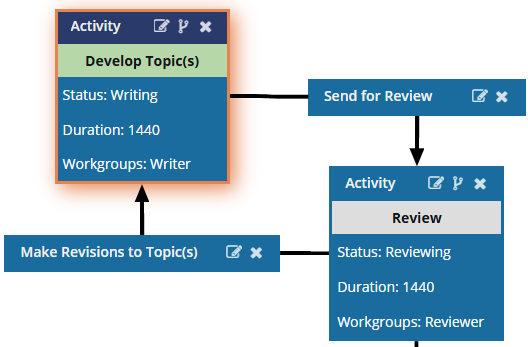 |
Each activity includes the following information:
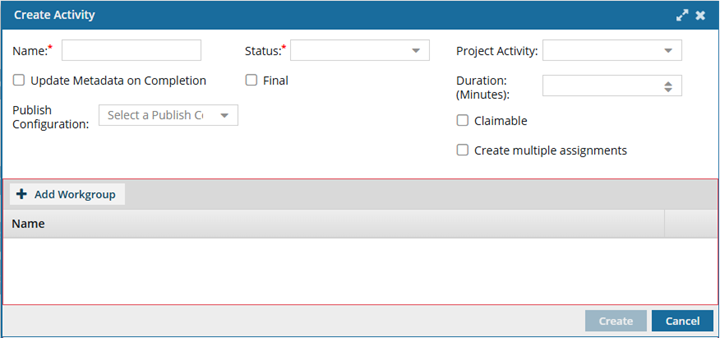
- Name: Identifies one task to be completed in the larger workflow (for example, Second Review)
- Status: Identifies the progress of the task (for example, Writing, Reviewing, Publishing) You can define your own Status when you create a new Activity.
 Manage activity status in a template.
 - Project Activity: Identifies the larger goal in a project (for example, Write Content, Approve Content, Edit Content) Project Activity is a required field and cannot be left blank. Although this field is not marked with a red asterisks, and you can create a new Activity without selecting a Project Activity, if you leave it blank, the Save and Submit options are not available until you correct the errors in the workflow template.
- If there is an error in the configuration of the Activity, you see the Activity name in red.
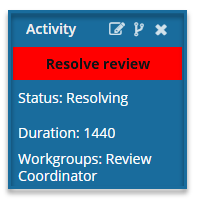
You must correct any errors before you can Save or Submit the workflow template.
You can define your own values for Project Activity. Manage workflow template activities - If there is an error in the configuration of the Activity, you see the Activity name in red.
- Update Metadata on Completion. Tells Inspire to populate or clear an XML element or attribute value across one or more components participating in the workflow. You use an XPath value to update metadata.
- Initial or Final: Identifies the activity as the first in the workflow or the last. Only one activity can be marked as Initial or Final, so these checkboxes may be unavailable if an activity is already designated as one of these values.
- Duration: Sets a deadline for the activity to be completed (in minutes from 0 to 525600 which is 1 year)
By default, the user is given a Duration of 0 minutes to complete the activity, so you will need to set your own duration.
Tips and tricks- When setting a duration in minutes, you can refer to these values:
- 1 day = 1440 minutes
- 2 days = 2880 minutes
- 3 days = 4320 minutes
- 4 days = 5760 minutes
- 5 days = 7200 minutes
- When starting a project workflow, the initial project assignment Due By date is set by adding the duration of the first activity to the current date.
- As the workflow progresses and new assignments are created, each assignment gets its Due By date from the activity Duration
- When setting a duration in minutes, you can refer to these values:
- Publish Configuration: This is an optional setting you use if the Activity is related to publishing. A Publish Configuration is created by an administrator and may include settings such as a default Publish Name, whether to skip or validate XML in the components, and profiling filters.
- Claimable: Specifies that this activity can be set to a State of Ready to Claim. In this case, the activity is not assigned to a single user but to a list of users who are notified when the activity can be claimed. The first user to claim the assignment completes the work. For more details, read:
- Create Multiple Assignments. When an active workflow advances to this activity, Inspire creates an assignment for each user in the Workgroup instead of a single assignment for the selected user. All users MUST complete the assignment (or all assignments must be canceled) before the Activity can be marked complete, and the workflow can be advanced. Important notes:
- Create Multiple Assignments is not available if you select Claimable.
- If you select Create Multiple Assignments, when you start a workflow based on this template, you will not be able to Change the current activity in a workflow.
- Workgroups: You use these collections of users to identify a list of participants with a common skill or job title
Inspire provides the following empty workgroups:
- Writer
- Reviewer
- Content Owner
- Publisher
Tips and tricks- Workgroup participants complete activities in a workflow.
- You can create your own workgroups.
- You can assign workgroups to an activity to identify who needs to complete the work.
- Workgroup participants are chosen from the list of users and roles included as project participants.
- You can add one or more participants to each workgroup.
- The same participant can be added to multiple workgroups
Workgroups
You use these collections of users to identify a list of participants with a common skill or job title.
- Workgroup participants complete activities in a workflow.
- Every Activity in a workflow template must have a Workgroup assigned.
- You must add at least one participant to each workgroup.
- The same participant can be added to multiple workgroups.
- When you start a workflow and select this template, you can assign tasks to the users in the Workgroups you create here in the template.
Workflow Activities are unique to a template.
If you create or update an Activity in a template, to re-use it in another template, you must re-create it in that specific template.
If you are working on a template provided by Inspire, you may see the following empty workgroups:
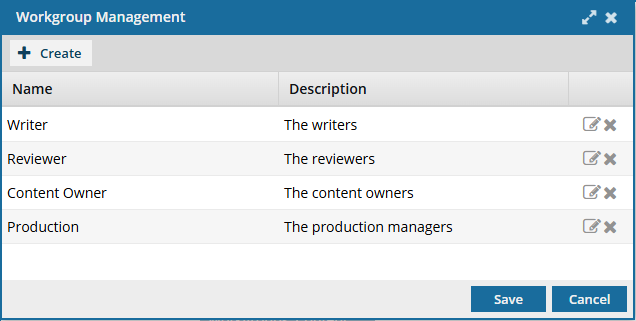
- Writer
- Reviewer
- Content Owner
- Publisher
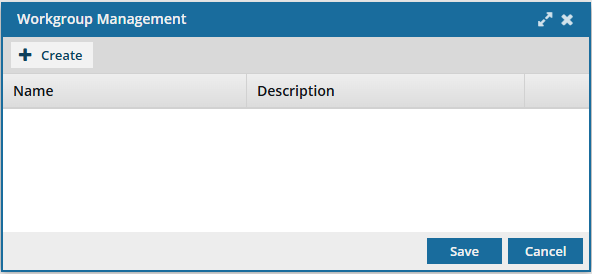
To add users or roles to a workgroup, you can  update it.
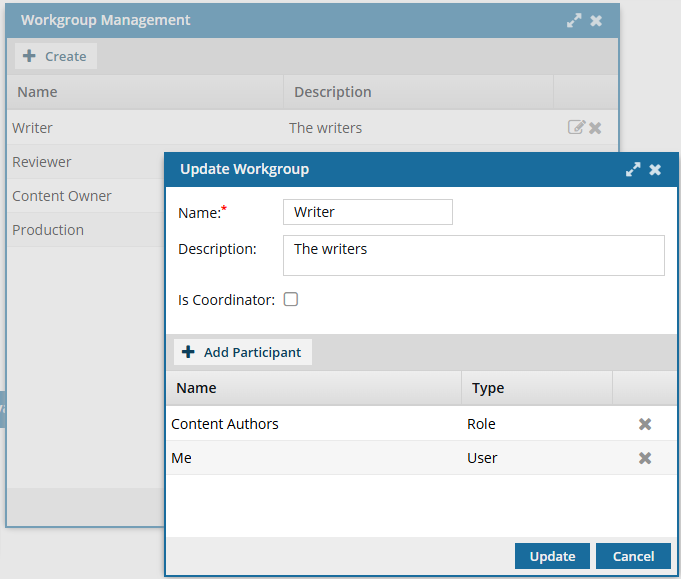
To create your own workgroup for the template you are working in, use the Create option.
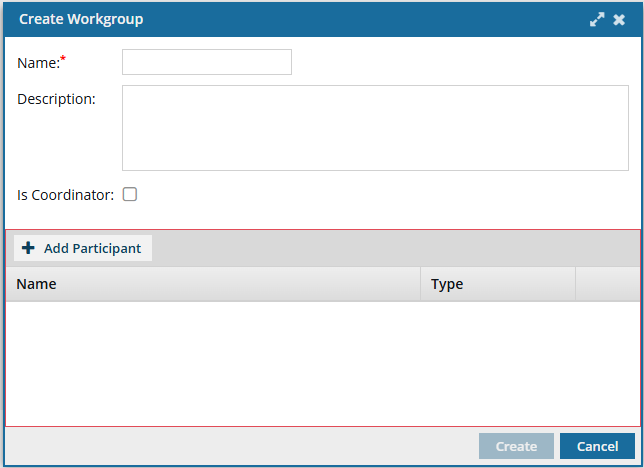
If you created a new workflow template component, you must create at least one Workgroup to assign to an Activity.
Transitions and Actions
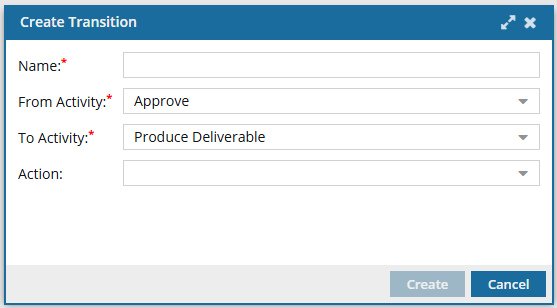
When designing your workflow in a template, you connect your Activities with a Transition. Transitions can optionally contain an Action.
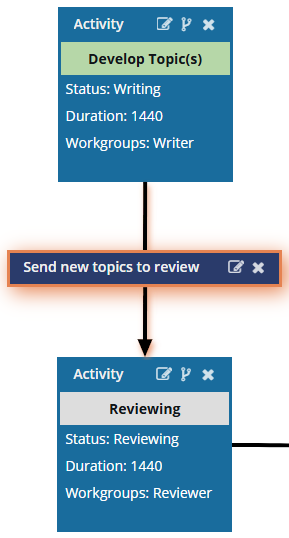
You use transitions to identify what should happen when a workflow Activity is completed. This is especially important if something needs to be done before the next Activity can begin.
- For example, after a writer creates content, you can create a transition with a Name that specifies the files should go to an editor for review.
- If there is also an Action that needs to be done, such as Take a snapshot, you can select from a list of Actions that have been created for this template.
Workflow Actions are unique to a template.
If you create or update an Action in one template, you cannot reuse it in another template. You must re-create the Action in each template.
 Use the toolbar option to define
  Actions.

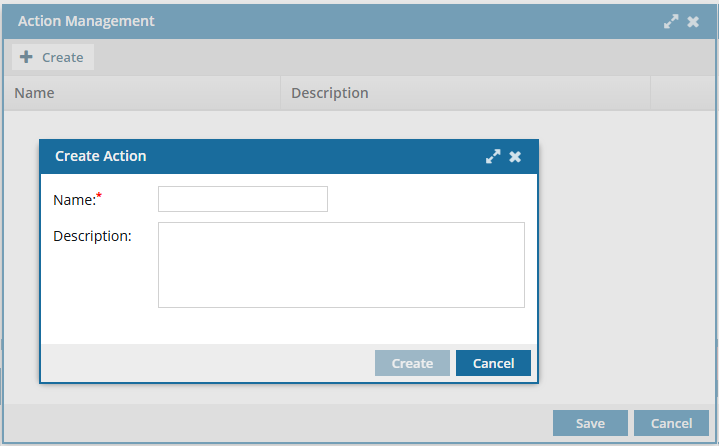
- Create Inspire transition Actions. You can configure a workflow template to include Actions that Inspire runs automatically. These Actions must be pre-configured before you can select them on the Update Transition screen.
- InspireCreateReview. When a user advances a project workflow Activity and the next Transition has an Action of InspireCreateReview, Inspire opens the Create Review screen for the current user. Any known information is pre-populated for the user. To create this action, follow the steps in: Add a Create Review Action to a topic workflow template.
- InspireCreateApproval. When a user advances a project workflow Activity and the next Transition has an Action of InspireCreateApproval, Inspire sends an email notification to each workgroup user assigned to the workflow activity that triggered the Transition. The workgroup users can confirm if they want to include component references in the approval process. No approval actions occur during this automation. Approval can occur manually or in the InspireApprove action. To create this action, follow the steps in: Add a Create Approval Action to a topic workflow template.
- InspireApprove. When a user advances a project workflow Activity and the next Transition has an Action of InspireApprove, Inspire automatically approves the source components associated with the workflow activity that triggered the Transition. This approval does not include component references and takes place without any user intervention. To create this action, follow the steps in: Add an Inspire Approve Action to a topic workflow template.
- InspireUnapprove. When a user advances a project workflow Activity, and the next Transition has an Action of InspireUnapprove, Inspire automatically unapproves components and returns them to the Draft state. The unapproval process runs silently (without user intervention and does not produce a notification). To create this action, follow the steps in: Automate unapprovals in a workflow.
- InspireCreateTranslation. In a workflow template, you can include an action that tells Inspire to open the Translate component screen with any known details and associated components. This allows a translation coordinator to quickly send workflow content to translation and advance the workflow to the translation stage. To create this action, follow the steps in: Automate translation in a workflow template.
- InspirePublish. In a workflow template, you can include an action that tells Inspire to open the Publish Component screen and include associated components in the job. This allows a Workgroup user to quickly send workflow content to publication and advance the workflow to the translation stage. To create this action, follow the steps in: Automate publication in a workflow template.
- InspireCompletenessReport. In a workflow template, you can include an action that tells Inspire to open the Check component completeness screen to run a completeness report before you publish a component or send it for translation. This allows a Workgroup user to quickly generate a report and advance the workflow. To create this action, follow the steps in: Automate completeness reporting in a workflow template.
- InspireTranslationCompletenessReport. In an active workflow template, this action tells Inspire to open the Translation Completeness Report screen so that you can select the languages and options you want. You must configure it exactly as described in: Automate translation completeness reporting in a workflow template. Otherwise, Inspire won't understand the Action as an automated process.
Manage your custom actions. You can create your own actions that Inspire does not perform, but that tells the workflow user what to do next, such as hire a copy editor. Manage custom actions in the following ways:
 Select an Action when creating or updating a Transition.
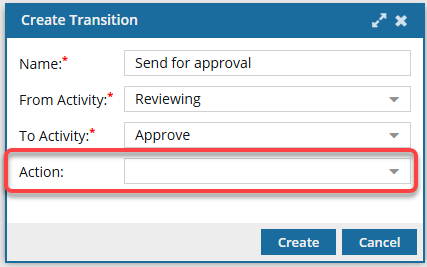
When a user completes a project workflow Activity and advances it to the next task, Inspire uses the Transition details to inform the workflow user what needs to be done next.