Publish multiple project components
After you've created a project to collect components and develop content, you can transform your Inspire content into a format your customers can use, such as PDF or HTML.
 You may not have permissions to publish under the following conditions:
- A content owner or administrator can set permissions to deny access to components or folders. If your permissions to content have been blocked, and you are not an administrator, you can use the Publish option in a project's Content pane, but it will fail with a warning.
- An Inspire administrator can define at the user and role level whether the Publish action is available.
- By default, only administrators can publish content in Inspire.
- You can see the Publish option only if you're an administrator or have the can_publish module property.
- Automatically reuse publishing settings. To streamline repeat publishing tasks, Inspire can now remember publishing settings on a per-component basis without a publishing profile. When a component is published, the settings you use are saved and automatically reused the next time you publish that same component.
- An administrator must enable the Remember Publishing Settings By Component feature. Admins can follow the steps in: Remember publishing settings.
- Opening the Publish dialog for a component restores the settings used during its most recent publication.
- Do not select anything in Publish Configuration when this feature is enabled. If you do, publishing settings are not remembered.
- Other users can modify the publishing settings at any time, and the updated choices will be saved for future publications of that component.
- Settings are NOT saved on a per-user basis.
 For a more permanent collection of settings that other users can't modify, you can create a publishing profile. Follow the steps in: Work with publishing profiles.

 Tips and tricks
- Add tokens in the job's Publish Name. You can use tokens when publishing one or more components, or in a publishing profile. For help using tokens in a publishing profile, follow the steps in Publish from a profile with tokens.
To publish multiple project components:
-
Click
 Projects.
-
On the project tab, in the Content pane, to open the Content folder, click the expand arrow
 .
.
-
In the Content pane, select the checkbox for the components you want to publish.
To see the complete name of the components and use advanced search to search through all folders within a project, click
 the Select Project Components option.
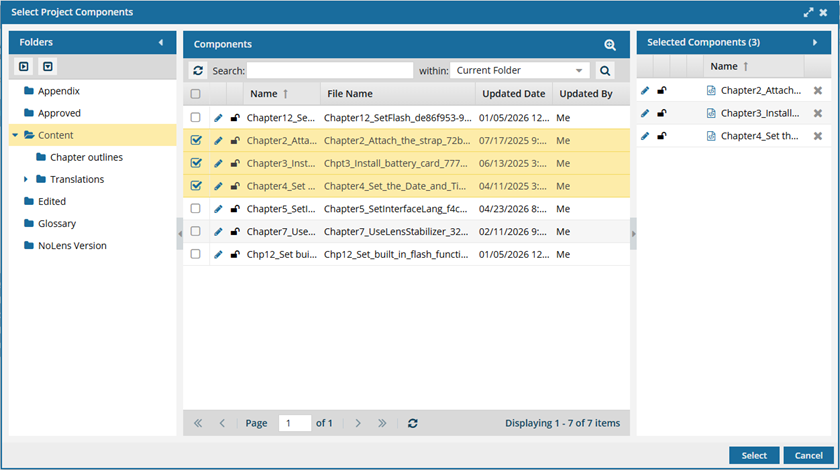
- To see more text in the Components pane, collapse the Folders panel by clicking
 the arrow that's pointing left.
- To quickly expand or collapse the folders, use the
 expand all and
  collapse all buttons.
- To find a component by keyword, in Search, enter words or phrases used in the component's name. In Within, select where in the project you want to search (Current Folder, Current and Subfolders, All Folders). Click Search
 .
. - To find a component by creating a query, click
 Advanced Search.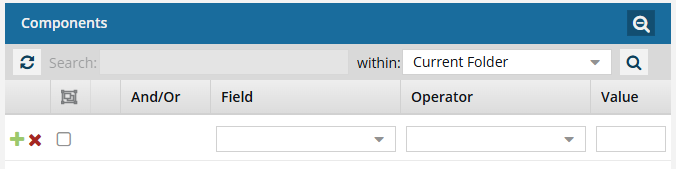
- Fields correspond to the columns in the grid. In the Field list, select the column you want to search in, such as Component State.
- After you select a Field, you must describe the relationship it has with the Value. In the Operator list, to include or exclude some or all of the values that you want to use, select an operator, such as
<>(not equal to). - The options in the Value list change depending on what you selected in Field. In the Value, select or enter the word, phrase, or number you are searching for in relation to the Field. For example, Component State (Field)
<>(Operator) Invalid (Value). - In Within, select where in the project you want to search (Current Folder, Current and Subfolders, All Folders).
- Optionally, to enter another clause to your query, click
 Add. Select whether you want to narrow your search by requiring that all statements must be true (And), or expand your search by requiring that any of the statements can be true (Or).
 - Click Search .
- To select multiple components to manage, select the checkbox for each component.
 Result: The components are listed on the Selected Components panel.
 - To close the Select Project Components screen, click Select.
- To see more text in the Components pane, collapse the Folders panel by clicking
-
On the Selected Components pane, click the Publish icon
 .
Result: The Publish Component screen opens.
.
Result: The Publish Component screen opens.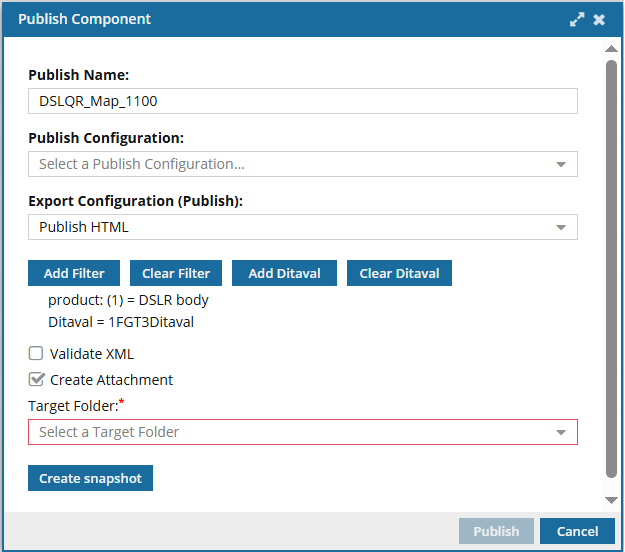
 Important notes:
- You only see the Add Ditaval button if you are publishing a map.
- If an administrator enables the Remember Publishing Settings By Component feature:
- Inspire prepopulates the screen with the settings used during its most recent publication.
- If you modify the publishing settings, the updated choices will be saved for future publications of this component.
-
Optionally, you can select a DitaVal file that exists in Inspire.
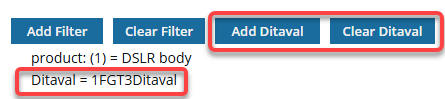 You can select only one DitaVal file.
-
Select the checkbox for a DitaVal file and click Select.
Result: You see the name of the DitaVal file you selected on the Publish Component screen listed under the Add Filter and Clear Filter buttons.
-
Select the checkbox for a DitaVal file and click Select.
-
On the Publish Component dialog, click Publish.
Result:
In the top-right corner, you see a message that Inspire is preparing your publishing job.

After Inspire successfully submits the job, you receive a notification that you can review on the Notifications tab, in Slack if it's configured for notifications, and in email.
If there are any components you don't have permissions to, they are listed in a publishing notification. The components named in the Issues section are not published.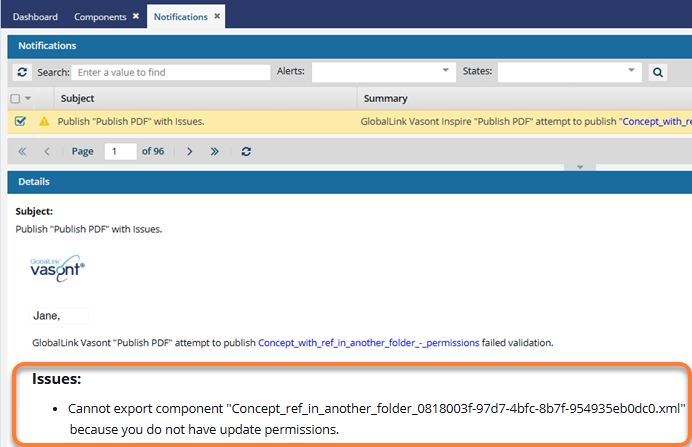
- Finding your deliverables.
- You can download your deliverable from publishing notifications or in Publish Server.
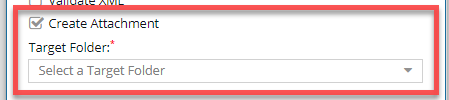
- You can also find the deliverable in Inspire if you selected the Create Attachment option when you were configuring settings on the Publish Component screen. You can find a copy of the published deliverable in the Target Folder you selected.
After the publishing job completes successfully:
- A copy of the published deliverable is imported back into Inspire automatically as a binary file.
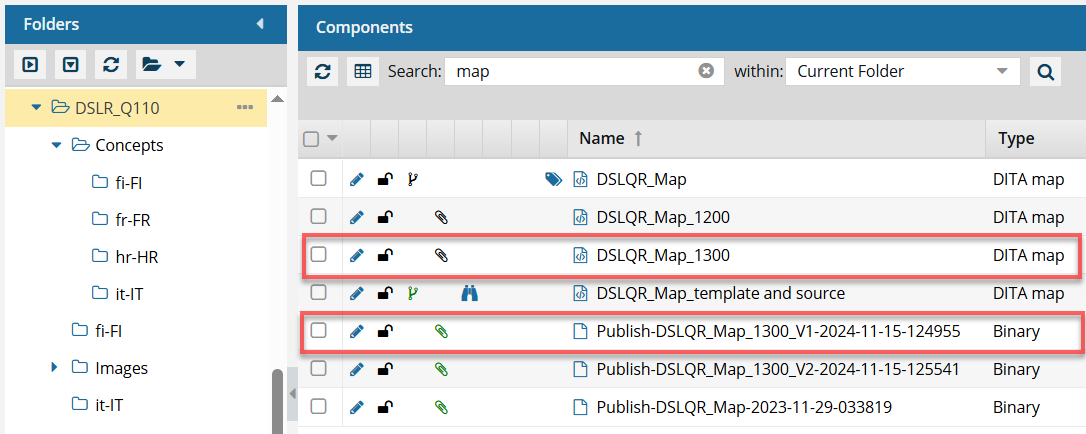
The file is named using the following default format: Publish-{ComponentName}-YYYY-MM-DD-HHHHMM. However, an administrator can configure Inspire to omit the timestamp from the published file name.
- A relationship between the component you published and the deliverable that was imported is created.
- In the Component's Browser, the component you published now has
 a black paperclip before its name. This indicates it references another component as an attachment.
 - In the Component's Browser, the published deliverable has
 a green paperclip before its name. This indicates it is referenced by another component as an attachment.
 - For more information on attachment relationships, read See component attachments.
- In the Component's Browser, the component you published now has
To learn about job management, read Welcome to Publish Server.
- Finding your deliverables.